
A surprising number of vehicles show up looking clean but still seem a little tired. The paint lacks depth. Sunlight exposes fine scratches. Water spots refuse to disappear no matter how many washes the car gets.
That usually leads to the same question. Should the paint be buffed, polished, or coated? Many drivers searching for premium car detailing with polish and coating assume these services do the same thing. They don’t. Each one solves a different problem, and choosing the wrong treatment can leave you paying for results you never really wanted.
This blog breaks down the differences in plain English and helps you figure out what your vehicle actually needs.
Paint Problems Rarely Start Overnight
Most paint damage builds slowly. A few trips through an automatic wash. Months of parking outside. Hard water drying on the surface. Nothing dramatic. Yet after a while, the finish starts looking older than the vehicle really is.
Walk around your car on a sunny afternoon and you might notice:
- Swirl marks circling across the paint
- Small scratches near door handles
- Water spots that seem permanent
- Dull patches where the shine used to be
Different issues call for different solutions. That is where buffing, polishing, and coating enter the conversation.
Buffing Is About Fixing What You Can See
Buffing focuses on correcting paint defects. A machine buffer and cutting compound work together to reduce imperfections sitting on the surface. Swirl marks, light scratches, oxidation and paint haze are usually the main targets.
Drivers looking for exterior buff and polish California services often choose buffing when the paint has visible flaws but still has plenty of life left in it.
One thing worth knowing: buffing is not mainly about shine. Its real job is removing the things that prevent paint from looking its best.
Polishing Brings the Paint Back to Life
Freshly corrected paint often looks better after buffing, but polishing takes things a step further.
Paint starts reflecting light more evenly. Colors appear richer. Dark vehicles gain depth. Lighter colors look cleaner and brighter.
A black sedan that seemed flat and tired in the morning can look completely different after a proper polish. That transformation is usually what people notice in detailing photos.
Many professionals pair buffing and polishing together because the two services complement each other naturally.
Ceramic Coating Protects the Work
A ceramic coating is not a repair service. That misunderstanding causes a lot of disappointment. Coatings lock in the condition of the paint. If scratches are already there, they stay there. If the finish is smooth and glossy, that is what gets protected.
Properly applied coatings help defend against UV rays, road grime, bird droppings, and everyday contamination. Washing also becomes easier because dirt has a harder time sticking to the surface.
For many owners investing in premium car detailing with polish and coating, the coating is simply the final step after the paint has already been corrected.
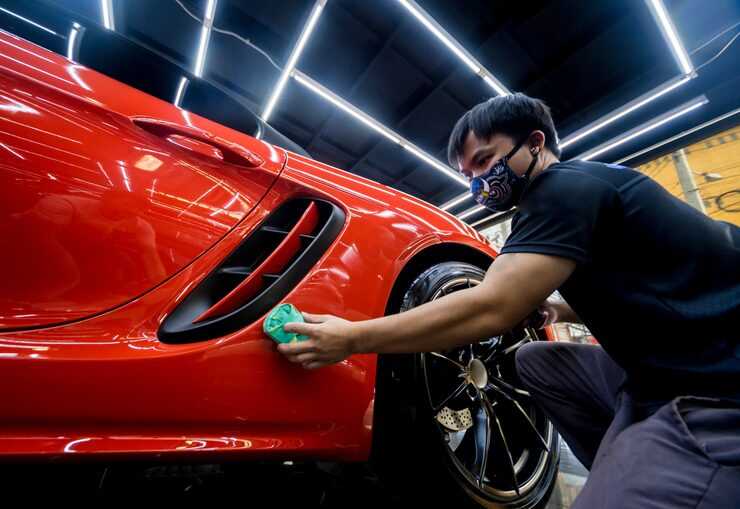
A Quick Real-World Example
A black SUV arrived recently with years of automatic wash damage. Under shade, it looked fine. Under direct sunlight, the story changed completely.
The hood was covered in swirl marks. The doors had light scratching. The paint lacked depth. A coating alone would not have solved any of that.
The vehicle first needed buffing to reduce defects. Polishing followed to restore clarity and gloss. Only then did a ceramic coating make sense.
The finished result looked dramatically different, not because of one service, but because each step was done in the proper order.
What Does Your Vehicle Need?
Paint that looks scratched, cloudy, or neglected often benefits from buffing. Paint that feels healthy but lacks shine may only need polishing.
Paint that already looks great and needs long-term protection is usually ready for coating. Many vehicles end up needing a combination of all three.
A trained technician at an expert car wash center Northridge location can usually tell within minutes which route makes the most sense.
Conclusion
Buffing removes defects. Polishing improves appearance. Coating helps preserve the finish.
None of them are better than the others. They simply serve different purposes. The right choice comes down to the current condition of the paint and the result you want to achieve. For drivers who want honest recommendations and professional paint care, Exotic Auto Spa helps match the treatment to the vehicle instead of pushing a one-size-fits-all service.
FAQs
1. What is the difference between buffing and polishing a car?
Buffing removes paint defects such as scratches and swirl marks, while polishing improves gloss and enhances the final appearance.
2. Is exterior buff and polish California service worth it for older vehicles?
Yes. Older vehicles often develop oxidation, swirl marks, and dull paint that can be significantly improved through professional buffing and polishing.
3. Can ceramic coating remove scratches?
No. Ceramic coating protects paint but does not remove scratches or existing imperfections.
4. How long does a ceramic coating last?
The lifespan varies based on the product used and maintenance habits, but professional coatings can last several years.